
How to Plan the Perfect 3-Day Trip to Paris
Complete Paris itinerary for first-time visitors with top attractions, tour guide recommendations, and insider tips for an unforgettable experience.
Read the full guideUpdated · 12 min read
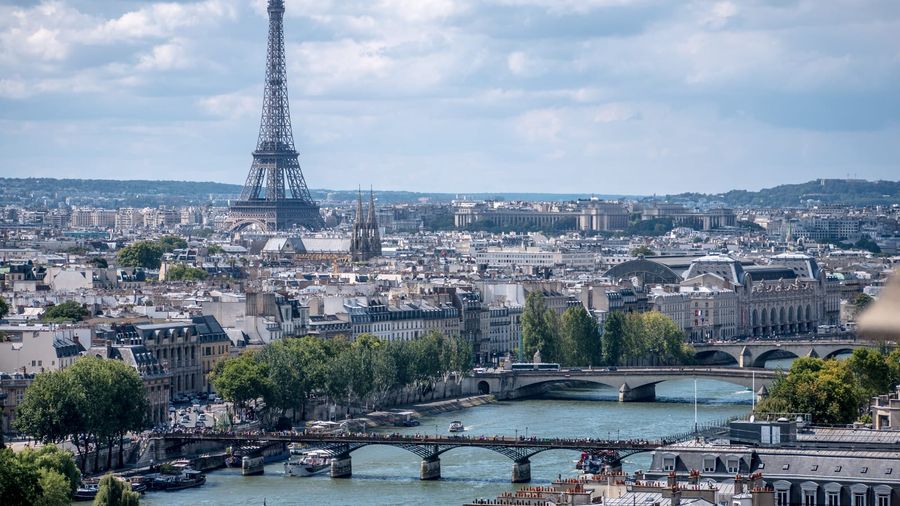
Plan Paris neighbourhood by neighbourhood over three days: the Seine and Île de la Cité, the Left Bank and Musée d'Orsay, the Right Bank with the Louvre and Le Marais, then Montmartre and a half-day at Versailles. Book timed tickets ahead, ride the métro, and visit in late September or October.
Planning your first trip to Paris? Rather than rushing from landmark to landmark, the best way to experience the City of Light is neighborhood by neighborhood. Each arrondissement has its own personality, and spending a few focused hours in one area beats crisscrossing the city all day. The Paris city guide connects with the broader France overview for side trips.
Where should you start along the Seine and its islands?
Begin on the Île de la Cité, where Roman-era Lutetia and Paris itself were born. Walk past Sainte-Chapelle's stained glass and the Conciergerie, then tie the day together with a sunset Seine cruise from Pont Neuf, €15-20, gliding past the Louvre and under historic bridges as the Eiffel Tower sparkles.
Paris was born on the Île de la Cité, and the riverbanks remain the emotional heart of the city. Start here to understand why this city exists at all.
Notre-Dame & Île de la Cité sit on the island where Roman-era Lutetia first took root. Even with Notre-Dame's ongoing restoration, the island rewards a slow morning walk past Sainte-Chapelle's extraordinary stained glass (book timed entry) and the Conciergerie, where Marie Antoinette awaited the guillotine.
A Seine river cruise at sunset ties together everything you'll see on foot. You'll float past the Louvre, the Musée d'Orsay, and under historic bridges while the Eiffel Tower's hourly sparkle lights up the sky. Evening departures from Pont Neuf or Pont de l'Alma run €15-20 per person.
Eating along the Seine: Skip the overpriced brasseries facing the water. Instead, duck one block inland to the Latin Quarter's Rue Mouffetard for market stalls, crêperies, and bistros like Chez Gladines where locals actually eat.
What defines the Left Bank and the Musée d'Orsay?
The Left Bank is Paris's intellectual and artistic heart — Hemingway's cafés, Sartre's Saint-Germain, jazz clubs, and bookshops. Its centrepiece, the Musée d'Orsay in a converted Beaux-Arts station, holds the world's finest Impressionist collection; arrive at 9:30 AM opening. Nearby, Shakespeare and Company and the Luxembourg Gardens reward a slow afternoon.
The Left Bank (Rive Gauche) is where Paris earned its reputation for intellectual and artistic life. This is Hemingway's Paris, Sartre's Paris, the Paris of jazz clubs and cramped bookshops.
The Musée d'Orsay
Housed inside a converted Beaux-Arts railway station, the Orsay holds the world's finest Impressionist collection. Monet's water lilies, Renoir's dance scenes, Van Gogh's self-portraits, Degas' ballerinas. Arrive right at 9:30 AM opening to see the star galleries before tour groups flood in around 11.
A semi-private guided tour (groups of six or fewer) costs €80-95 and is worth it here. The collection is vast and a knowledgeable art historian can steer you to overlooked masterpieces on the upper floors that most visitors never reach.
Saint-Germain-des-Prés
From the Orsay, walk south into Saint-Germain. Browse the bouquinistes (riverside booksellers), stop at Shakespeare and Company, then wander past Café de Flore and Les Deux Magots, the legendary cafés where existentialism was debated over espresso.
The Luxembourg Gardens
End your Left Bank afternoon here. Parisians treat the Luxembourg as their living room: children sail toy boats in the fountain, retirees play chess under chestnut trees, students read on iron chairs. It's free, it's beautiful, and it's the antidote to museum fatigue.
What should you see on the Right Bank?
The Right Bank concentrates grandeur and French history. Give the Louvre at least three hours for the Mona Lisa, Venus de Milo, and Winged Victory; a guide is genuinely worth it here. Then wander medieval Le Marais and the Place des Vosges, and climb the Arc de Triomphe for €13 at dusk.
Cross back over the river and the energy shifts. The Right Bank is commerce, grandeur, and the concentrated weight of French history.
The Louvre
Home to 35,000 works including the Mona Lisa, Venus de Milo, and Winged Victory of Samothrace. The Louvre deserves at least three hours, and even then you'll only scratch the surface.
The case for a guide here is strong. The museum spans three wings and four floors. Without a plan, you'll spend half your time lost in Egyptian antiquities when you meant to find the Italian Renaissance. Licensed guides know which galleries clear out after 2 PM and how to reach the Mona Lisa from a side corridor that avoids the main crush. Semi-private highlight tours run about €95 per person with skip-the-line entry included.
Key works to prioritize:
- Mona Lisa (Denon Wing, first floor)
- Venus de Milo (Sully Wing, ground floor)
- Winged Victory of Samothrace (Denon Wing, main staircase)
- The Coronation of Napoleon (Denon Wing)
- Vermeer's The Lacemaker (Richelieu Wing)
Le Marais
Ten minutes on foot from the Louvre, Le Marais is medieval Paris at its most charming. Narrow streets, hidden courtyards (peek through heavy doors marked "cour intérieure"), and the Place des Vosges, Paris's oldest planned square.
Le Marais is also Paris's best neighborhood for dinner. The Jewish Quarter along Rue des Rosiers serves outstanding falafel, while Rue de Bretagne and the surrounding streets are packed with wine bars and modern French bistros. No reservations needed at most places if you eat before 8 PM.
Champs-Élysées & Arc de Triomphe
The world's most famous avenue deserves a stroll, though the real reward is climbing the Arc de Triomphe (€13) for a panoramic view of Paris's star-shaped layout radiating outward. Time your visit for late afternoon light.
Shopping detour: Ladurée for macarons, the Sephora flagship (Europe's largest), and side streets off the Champs for boutiques without the boulevard markup.
What makes Montmartre worth the climb?
Montmartre feels like a hilltop village where Picasso, Van Gogh, and Toulouse-Lautrec once worked. Sacré-Cœur crowns it with a sweeping panorama, while Place du Tertre's portrait painters and the Wall of Love fill the streets below. Come after 2 PM, once the tour coaches leave, or at dusk for the atmospheric views.
Montmartre feels like a separate town perched above Paris. This is where Picasso, Van Gogh, and Toulouse-Lautrec lived and worked, and the bohemian spirit lingers in every steep staircase and ivy-draped café.
What draws people up the hill
- Sacré-Cœur Basilica with its white domes and sweeping city panorama
- Place du Tertre, the artists' square where portrait painters still set up easels
- Le Mur des Je t'aime (the Wall of Love) in Jehan Rictus garden
- Moulin Rouge at the base of the hill (iconic facade, worth a photo)
Going beyond the postcard
The Montmartre most visitors see is a small triangle around Sacré-Cœur. A local guide (walking tours run €25-40 per person) can take you through the hidden staircases, tiny vineyards, and back-alley studios that made this neighborhood famous. They know which bistros serve honest plats du jour and which are tourist traps with laminated menus.
Afternoon is the best time to visit. Morning light on Sacré-Cœur is beautiful, but the tourist coaches arrive by 10 AM. Come after 2 PM when the day-trippers leave, or at dusk when the hilltop views are most atmospheric.
Is Versailles worth a half-day from Paris?
Yes. Versailles sits 35 minutes from central Paris by RER and feels like another world — Louis XIV's monument across 2,000 acres. Focus on the Hall of Mirrors, the King's Grand Apartments, and Marie Antoinette's Estate, and time an April-to-October visit for the fountain shows. Book at least two weeks ahead in peak season.
The Palace of Versailles sits 35 minutes from central Paris by RER train and feels like entering another world. Louis XIV's monument to absolute power sprawls across 2,000 acres of formal gardens, gilded halls, and royal apartments.
Making the most of limited time
Focus on the Hall of Mirrors, the King's Grand Apartments, and Marie Antoinette's Estate (the rustic hamlet where she played at country life). If you visit April through October, time your arrival for the fountain shows, when the garden's 1,400 jets perform choreographed displays set to Baroque music.
A full-day guided tour from Paris (€110-140 per person, transport included) handles logistics and provides skip-the-line access. The palace is enormous and disorienting without context. Guides point out details you'd walk past: the political symbolism in ceiling paintings, the engineering that heated this vast building, the specific room where the Treaty of Versailles was signed.
Book at least two weeks ahead during peak season. The palace caps daily visitors and regularly sells out.
How do you get around Paris?
The métro is fastest and cheapest; a three-day Paris Visite pass for zones 1-3 costs €29.40 and covers metro, RER, and bus. Walking, though, is the real way to see Paris — the Eiffel Tower to Notre-Dame is about 45 minutes along the riverbank. Save taxis for late nights or luggage.
Métro is fastest and cheapest. Buy a Paris Visite pass (3 days, zones 1-3: €29.40) for unlimited metro, RER, and bus travel.
Walking is the real way to see Paris. Most major attractions cluster along the Seine, and a walk from the Eiffel Tower to Notre-Dame takes about 45 minutes along the riverbank.
Taxis and rideshares make sense for late-night returns or when carrying luggage. Expect €25-30 for an airport transfer.
When is the best time to visit Paris?
Late September through mid-October offers the best balance of mild weather, autumn foliage, and manageable crowds, with spring's April-May window a close second. Summer brings peak crowds and prices but long daylight and festivity, while winter is budget-friendly with Christmas markets and short queues, though the days run short and grey.
Late September through mid-October offers the best balance of mild weather, autumn foliage, and manageable crowds. Spring (April-May) is the second-best window. Summer means peak crowds and prices but also long daylight hours and a festive atmosphere. Winter is budget-friendly with Christmas markets and fewer queues, though days are short and gray.
How much does a 3-day Paris trip cost?
A three-day Paris trip runs roughly €650 to €1,200 or more, depending on how you sleep and dine. Budget travellers spend about €150-250 on three hotel nights and €25-35 a day on meals; comfort seekers pay €600 and up for hotels alone, plus €400 or more on guided tours and entries.
| Category | Budget | Mid-Range | Comfort |
|---|---|---|---|
| Hotel (3 nights) | €150-250 | €300-450 | €600+ |
| Guided tours & entry | €200 | €340 | €400+ |
| Meals (per day) | €25-35 | €50-70 | €100+ |
| Transport (3 days) | €55 | €55 | €80+ |
Total estimate: €650-€1,200+ depending on accommodation and dining choices.
How do you choose a Paris tour guide?
Look for official French licensing, required for major museum and monument guides, alongside specialist art or architecture expertise and small groups under twelve. Platforms like GetYourGuide, Viator, and Withlocals aggregate reviews, while the Paris Convention and Visitors Bureau lists licensed associations. Skip-the-line access alone saves hours at the Louvre and Versailles.
Look for official licensing (required in France for major museum and monument guides), specialized expertise in art history or architecture, and small group sizes under 12 people. Platforms like GetYourGuide, Viator, and Withlocals aggregate reviews, but also check the Paris Convention and Visitors Bureau for licensed guide associations.
Skip-the-line access, included in most guided bookings, saves genuine hours at the Louvre, Versailles, and the Eiffel Tower summit.
What should you pack for Paris?
Comfortable walking shoes come first, since you will cover ten-plus miles daily on uneven cobblestones. Add a light rain jacket, a Type C power adapter, a crossbody bag against pickpockets, and a reusable water bottle for Paris's excellent tap water. Pack muted, elegant layers to blend in with locals.
Comfortable walking shoes top the list (expect 10+ miles daily on uneven cobblestones). Add a light rain jacket, a European Type C power adapter, a crossbody bag for pickpocket deterrence, and a reusable water bottle (Paris tap water is safe and excellent).
Parisians dress in muted, elegant layers. You don't need to match them, but ditching the baseball cap and neon sneakers helps you blend in and sometimes gets you better treatment at restaurants.
What are Paris's unwritten rules?
Restaurants stop seating between roughly 2 PM and 7 PM, so time lunch accordingly, and top attractions sell out weeks ahead, making advance booking essential. Open every interaction with 'Bonjour,' and always validate your metro ticket — inspectors issue €60 fines. Three major sites a day is a sustainable, unhurried pace.
Paris has rhythms that catch visitors off guard. Restaurants stop seating between roughly 2 PM and 7 PM, so plan lunch accordingly. Major attractions sell out weeks ahead in peak season, making advance booking essential for the Eiffel Tower summit, the Louvre, and Versailles. And while English is widely spoken in tourist areas, starting any interaction with "Bonjour" goes a long way.
Validate your metro ticket every time you board. Inspectors issue €60 fines for unvalidated tickets, and they check more often than you'd expect.
Three major sites per day is a sustainable pace once you factor in transit time, queues, and meals. Overloading your schedule is the fastest way to turn a dream trip into an exhausting blur.
Related Guides
For more Paris travel planning resources, check out:
- Best Time to Visit London - Seasonal planning advice that applies across major European capitals
- European Christmas Markets - Festive Paris markets and holiday planning
- Amsterdam Canal Tours Compared - Another iconic European city experience
Paris rewards those who slow down. Wander aimlessly through a neighborhood, sit in a café longer than you planned, watch the light change on limestone facades. The landmarks are magnificent, but the city's real magic lives in the spaces between them. With this neighborhood-by-neighborhood approach as your foundation, you're set for an unforgettable first visit to the City of Light.
Have questions about planning your Paris trip? Contact us for personalized recommendations and expert tour guide connections.
Frequently Asked Questions
How many days do I need to see Paris?
Three full days covers the major landmarks and a half-day at Versailles. A longer stay lets you explore neighbourhoods and museums at a more relaxed pace.
Should I book the Louvre and Eiffel Tower in advance?
Yes. Both sell timed-entry tickets online that let you skip the longest queues, and popular slots frequently sell out in high season, so book several days ahead.
What is the best way to get around Paris?
The metro is fast, cheap and reaches everywhere, and a carnet of tickets or a day pass saves money. Central Paris is also very walkable, which is often the nicest way to see it.
Is a day trip to Versailles worth it from Paris?
Yes. Versailles is about forty minutes by RER train and rewards a half to full day. Book a timed palace ticket and arrive early, as it is one of France's busiest attractions.