
Planning Your Istanbul Trip: Where East Meets West
A practical planning guide for Istanbul — spanning the dual-continent city's must-see mosques and bazaars, neighbourhood choices, Bosphorus cruises.
Read the full guideUpdated · 10 min read
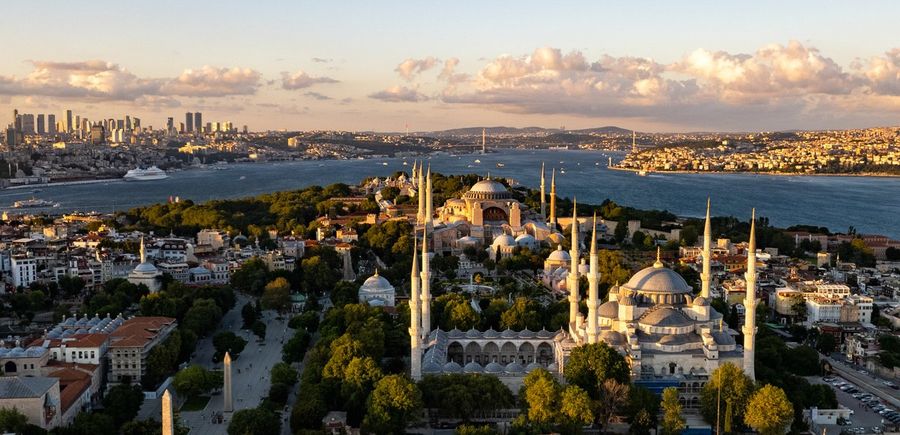
Istanbul spans two continents and rewards at least three days, five to reach beyond the monuments. Base yourself in Sultanahmet for the Hagia Sophia, Blue Mosque, and Topkapı, or Beyoğlu for nightlife. Visit in April–June or September–October, cross the Bosphorus by ferry, and hire a licensed guide for the layered history.
Istanbul occupies a position unlike any other city on earth — spread across two continents, shaped by Roman, Byzantine, and Ottoman empires in succession, and home to fifteen million people whose daily life unfolds against one of the world's most dramatic urban backdrops. The challenge in planning a trip is not finding things to do; it is choosing among an embarrassment of them while leaving room to absorb the weight of history without exhaustion.
How is Istanbul laid out?
The Bosphorus splits Istanbul between Europe and Asia, and the Golden Horn further divides the European side into historic Sultanahmet and the modern Beyoğlu and Galata districts. First-timers spend most time on the European side, saving a ferry crossing to Kadıköy on the Asian shore for the city locals actually inhabit.
The city is divided by the Bosphorus strait, with the European side further split by the Golden Horn inlet into the historic peninsula (Sultanahmet) to the south and the modern districts of Beyoğlu and Galata to the north. Most first-time visitors spend the majority of their time on the European side; a day trip or afternoon ferry crossing to the Asian side (Kadıköy and Moda) rewards those curious about the city locals actually live in.
Sultanahmet is where the densest concentration of major Byzantine and Ottoman monuments sits — the Hagia Sophia, Blue Mosque, Topkapı Palace, and Grand Bazaar are all walkable from each other. It is the obvious base for a first visit but can feel overly tourist-facing.
Beyoğlu and Galata sit across the Golden Horn and offer the city's best independent restaurants, rooftop bars, and the atmospheric İstiklal Avenue. Staying here gives you immediate access to the city's contemporary cultural life alongside easy ferry connections to Sultanahmet.
Kadıköy on the Asian side is the choice for travellers who want to experience Istanbul the way most residents do — neighbourhood markets, excellent fish restaurants, and a local energy that the tourist districts have largely ceded.
When is the best time to visit Istanbul?
April to June and September to October are the most comfortable windows, with mild 16–22°C temperatures, tulips or fine autumn light, and lighter crowds than the July–August heat. Winter is cool, occasionally rainy, and cheap, emptying museum queues and pushing the food scene and covered bazaars and hammams to the fore.
April to June and September to October are the most comfortable periods. Spring brings mild temperatures (16–22°C), blooming tulips in city parks (the Istanbul Tulip Festival runs in April), and lighter crowds than summer. Autumn has similar temperatures and arguably superior light for photography. Neither period has the oppressive heat and maximum tourist pressure of July and August.
Winter (December–February) is cool and occasionally rainy but rarely freezing. Museum queues virtually disappear, hotel rates drop substantially, and the city's covered spaces — bazaars, hammams, tea houses — become more obviously essential. This is also when Istanbul's food scene shines brightest without the distraction of outdoor terraces.
Ramadan timing shifts annually (it is a lunar calendar) and affects restaurant hours and the rhythm of certain neighbourhoods; it is worth checking whether your visit overlaps.
Which monuments should you prioritise in Istanbul?
Focus on four: the Hagia Sophia, free to enter early before the crowds; the Blue Mosque, free but closed around five daily prayers; Topkapı Palace, a half-day with the Harem supplement worthwhile; and the Grand Bazaar's 4,000 shops, best paired with the more manageable Spice Bazaar for atmosphere over bargains.
Hagia Sophia (Ayasofya) is the city's most important building by any measure — a sixth-century Byzantine basilica that served as a cathedral, then a mosque, then a museum, and since 2020 again a working mosque. Entry to the main hall is free; the upper galleries require an additional ticket. Visit early in the morning (opening is typically 9 a.m.) to experience it before the crowds arrive and the acoustics fill with noise.
The Blue Mosque (Sultan Ahmed Camii), directly across Sultanahmet Square from Hagia Sophia, is an active place of worship and entry is free but timed around prayer schedule closures (the mosque closes for approximately 90 minutes five times daily). Dress conservatively and remove shoes; head coverings for women are required and provided at the entrance.
Topkapı Palace was the administrative centre of the Ottoman Empire for four centuries. The Harem section (separate ticket required) is worth the supplement for the insight it provides into court life. Budget a full half-day; the palace grounds are extensive and the treasury alone warrants an hour.
The Grand Bazaar (Kapalıçarşı) is one of the world's oldest and largest covered markets — over 4,000 shops under 61 covered streets. It is genuinely disorientating and not particularly cheap, but walking through it is an atmospheric experience. The neighbouring Spice Bazaar (Mısır Çarşısı) is smaller and more manageable; the wholesale spice and tea sellers around its perimeter are better value than the tourist-facing stalls inside.
How do you get around Istanbul?
An Istanbul Kart transit card covers trams, metro, buses, and ferries with a per-journey discount. The T1 tram links Sultanahmet to Kabataş, the Marmaray rail tunnels beneath the Bosphorus to the Asian side, and the scenic vapur ferries double as sightseeing. Use metered taxis or the BiTaksi app to avoid route inflation.
The city's terrain — built on steep hills with water on three sides — makes orientation genuinely challenging. The tramway (T1 line) connects Sultanahmet to Kabataş via Karaköy efficiently. The Marmaray commuter rail now links the European and Asian sides via an underwater tunnel beneath the Bosphorus. Ferries (vapur) are both practical transport and an experience in themselves; the regular İDO ferries running between Eminönü, Karaköy, Beşiktaş, and Kadıköy are the most scenic and affordable way to cross the water.
Taxis in Istanbul have a reputation for route inflation and should be used with the meter running — or through a ride-hailing app (BiTaksi is the local alternative to Uber) that provides transparent pricing.
The Istanbul Kart (an RFID transit card) gives you access to all public transit with a small per-journey discount. Pick one up at any Akbil machine in major transport hubs.
How do you experience an Istanbul hammam properly?
Skip the tourist-facing baths near Sultanahmet and choose a historic hammam like Çemberlitaş (1584) or Çağaloğlu (1741), where quality is reliable despite higher prices. A full service — steam, kese exfoliation, and soap massage — runs 45 to 60 minutes. Book ahead in high season and bring a separate change of clothes.
A visit to a traditional Turkish hammam is one of Istanbul's most distinctive experiences and is frequently botched by visiting the over-tourist-facing facilities near Sultanahmet. The Çemberlitaş Hamamı (built 1584) and Çağaloğlu Hamamı (1741) are historically significant and better maintained than many alternatives; prices are higher than neighbourhood hammams but the quality is reliable.
A full hammam service — steam, kese (exfoliation mit), soap massage — takes 45 to 60 minutes. Book in advance in high season. Bring a separate change of clothes; the changing rooms provide peştamal (cotton towels) but your street clothing will absorb the steam heat.
Where should you eat in Istanbul?
Look beyond Sultanahmet's tourist menus. Karaköy and Galata deliver creative modern Turkish cooking and excellent coffee, the Beşiktaş fish market grills seafood and mezes at half the Sultanahmet price, and Çiçek Pasajı in Beyoğlu offers meyhane dining — shared cold mezes, rakı, and grilled fish stretched leisurely over several hours.
Istanbul's cuisine is one of the world's great regional food traditions, and the city's eating landscape is far more varied than the tourist menus in Sultanahmet suggest. Several areas to seek out:
Karaköy and Galata for creative modern Turkish cooking and excellent coffee. The area has gentrified rapidly in the past decade and now hosts the city's most interesting new restaurants.
Beşiktaş fish market on the European side of the strait for grilled fish and mezes in unpretentious surroundings. The same quality at half the Sultanahmet price.
Çiçek Pasajı and the surrounding streets in Beyoğlu for meyhane dining — the traditional Istanbul tavern format with shared cold mezes, rakı (anise spirit), and grilled fish over several hours. This is distinctly local and worth seeking out.
Is a guide worth it in Istanbul?
Yes, more clearly than in most cities. Istanbul's layered civilisations, intertwined religious and political history, and counterintuitive geography make expert interpretation pay. A guide licensed by Turkey's Ministry of Culture moves you efficiently between sites and reaches the tea houses solo visitors miss. Half-day private tours start around €80–120 per person.
Istanbul's historical complexity — multiple civilisations layered beneath each other, religious and political history intertwined, geography that makes self-navigation counterintuitive — makes it one of the cities where guided interpretation pays the clearest dividends.
A licensed guide certified by Turkey's Ministry of Culture can move you efficiently between sites, explain how Byzantine floor mosaics became Islamic geometric patterns in the same building, and take you to the fish stalls and tea houses that a solo traveller walking the tourist circuit is likely to miss entirely. Half-day private tours start around €80–120 per person; themed specialist tours (Ottoman architecture, Byzantine heritage, culinary walks) are available and particularly recommended.
What should you know before visiting Istanbul?
Carry small-denomination lira, since many vendors and tea houses stay cash-only, and note the Grand Bazaar and Spice Bazaar close on Sundays. Dress modestly near mosques, avoid the Hagia Sophia during prayer times, and pack for variable water pressure in heritage buildings. Travel insurance is wise given uneven healthcare standards.
- Keep small-denomination lira available — many market vendors and tea houses are still cash-only
- The Grand Bazaar and Spice Bazaar are closed on Sundays
- Hagia Sophia is a working mosque; visitors are asked not to visit during prayer times (check current prayer schedule on arrival)
- Travel insurance is recommended; healthcare standards vary significantly between public and private facilities
- The city observes a moderate Islamic culture; dress modestly around mosques and conservative residential neighbourhoods
- Water pressure can vary — most hotels have reliable hot water but the old pipe infrastructure in heritage buildings can surprise
Istanbul rewards the traveller who arrives with patience and curiosity in equal measure. Its contradictions — old and new, sacred and secular, European and Asian — are its character, not a problem to solve. Three days is a reasonable minimum; five days allows you to move beyond the main monuments into the neighbourhoods that make the city genuinely irreplaceable.
Frequently Asked Questions
What should I wear to visit mosques in Istanbul?
Modest dress is required, with shoulders and knees covered for everyone and a headscarf for women. Shoes are removed at the entrance, and major mosques provide scarves and coverings free of charge.
Is the Hagia Sophia free to enter?
The main prayer hall now operates as a working mosque and is free to enter, though there can be queues and prayer-time closures. A paid ticket covers the upper gallery and its historic mosaics.
Are Bosphorus cruises worth it in Istanbul?
Yes. A Bosphorus cruise is one of the best ways to grasp the city's layout across two continents. Public ferries are cheap, while private tours offer commentary and smaller groups.
How do I get around Istanbul?
An Istanbulkart travel card covers the trams, metro, buses and ferries, which together reach most sights. The tram through the historic peninsula is especially useful for first-time visitors.