

Overview
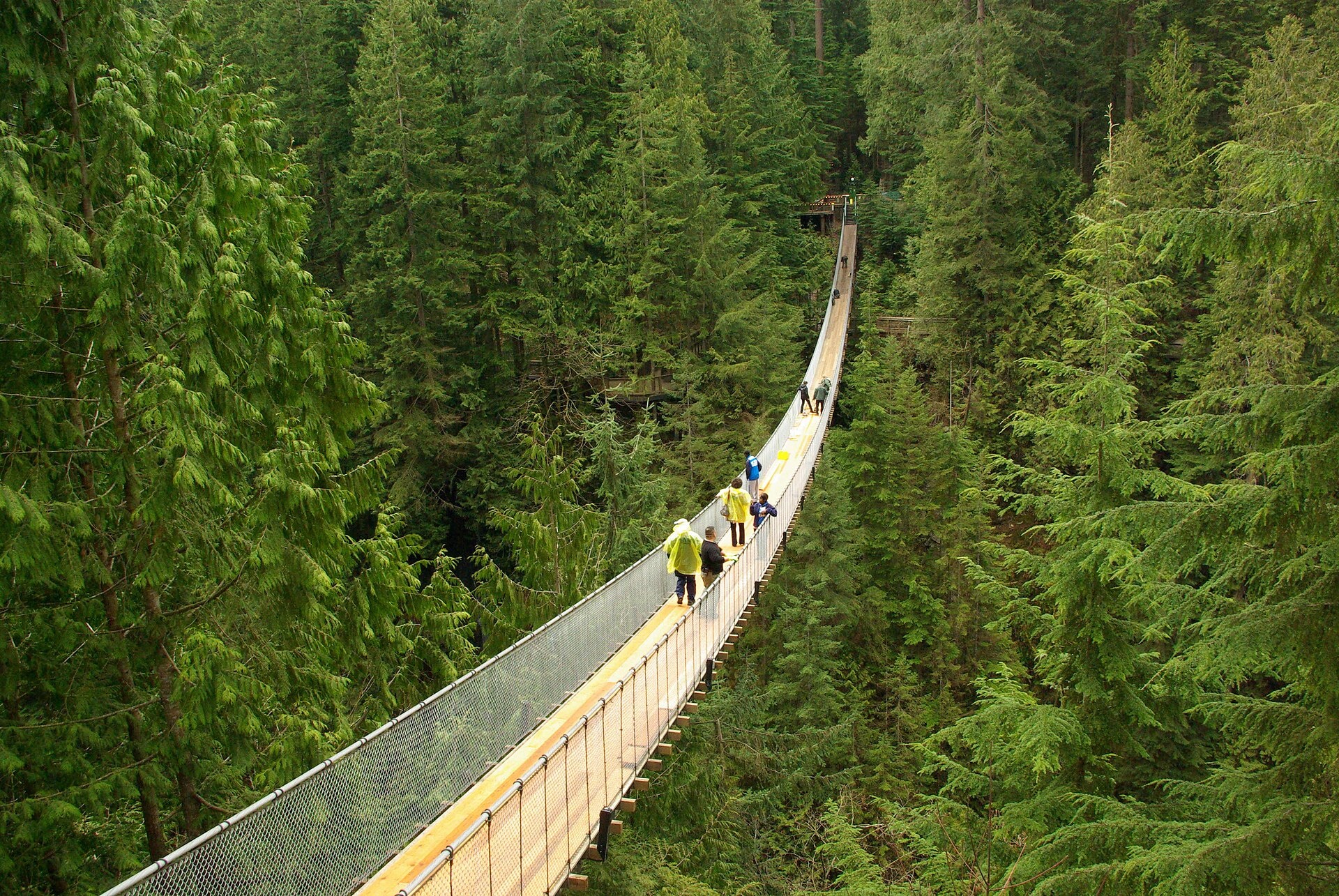
Scottish civil engineer George Grant Mackay strung the first rope-and-plank crossing over the Capilano River canyon in 1889, motivated less by tourism than by a desire to reach the forest on the far side. That improvised footbridge has since evolved into a 140-metre steel-cable span dangling 70 metres above the river, and the surrounding parkland has grown into one of British Columbia's most-visited paid attractions. The canyon itself is a narrow gash carved by glacial meltwater through granite and old-growth forest, where the river churns white over boulders far below and the moss-coated walls disappear into a canopy of Douglas fir and western hemlock. Beyond the bridge, a network of elevated walkways threads through the treetops and clings to the granite cliff face, extending the vertigo well past the initial crossing. A free shuttle from downtown Vancouver makes the North Shore location easy to reach without a car.
Engineering Facts
George Grant Mackay's 1889 original was little more than hemp rope and cedar planks, a crossing so precarious that visitors had to grip the railings and shuffle sideways above the churning Capilano River. The current bridge, rebuilt in 1956 with steel cables anchored into the granite canyon walls, spans 140 metres and hangs 70 metres above the river — engineering that must withstand not only the weight of hundreds of simultaneous visitors but also the lateral sway generated by wind funnelling through the canyon and the rhythmic footfall of pedestrian traffic. The cables are anchored into bedrock on both sides using deep-drilled concrete foundations, and the deck is designed to flex rather than resist movement, distributing dynamic loads across the suspension system the way a hammock absorbs the weight of its occupant. The Treetops Adventure, added in 2004, required a different engineering approach entirely: seven smaller suspension bridges were strung between old-growth Douglas firs at heights up to 30 metres, with attachment platforms bolted around the trunks using compression collars that do not penetrate the bark or damage the living trees. Cliffwalk, completed in 2011, pushed engineering further still — a series of cantilevered steel walkways and glass-bottomed platforms were anchored directly into the granite cliff face above the canyon, jutting out over open air with nothing below but a 70-metre drop to the river. Each structural element was helicopter-lifted into position to avoid disturbing the surrounding old-growth forest.
Observation Points
The main bridge: A 140-metre suspension span that bounces and sways with every step, offering a stomach-dropping view straight down into the mossy canyon and the river surging over boulders below. Treetops Adventure: Seven smaller suspension bridges strung between old-growth Douglas firs at a height of 30 metres, creating a mid-canopy walkway through the forest with platforms that let you pause and listen to the birds. Cliffwalk: A series of cantilevered walkways and glass-bottomed platforms bolted to the granite cliff face above the canyon, jutting out over open air with nothing but a railing between visitors and the void. First Nations cultural exhibits: Carved totem poles, a longhouse-style interpretive centre, and seasonal storytelling sessions introduce the art, mythology, and history of the Coast Salish peoples who have lived along the Capilano watershed for millennia. Canyon Lights: Each winter, hundreds of thousands of LED lights are strung through the forest and along the bridge cables, casting the canyon in blues, golds, and greens while the mist catches the glow — a genuinely magical spectacle that draws repeat visitors year after year.
When to Visit
General hours: Daily 9 AM - 6 PM (extended to 9 PM during Canyon Lights season, late November through January). Summer peak: Opens at 8:30 AM from mid-June through August. Best time: Arrive right at opening on a weekday morning — by noon the bridge fills with tour-bus groups and the sway intensifies with traffic. Canyon Lights: The winter illumination transforms the park after dark, and evening visits feel entirely different from daytime ones.
Admission and Costs
Adult admission: CA$63 (includes all attractions within the park). Child admission (6-12): CA$22, children under 6 free. Free shuttle: A complimentary shuttle bus runs from downtown Vancouver (Canada Place stop), eliminating the need for a car or taxi. Canyon Lights: Included in regular winter admission — no separate ticket required.
Tips for Visitors
Vertigo warning: The bridge sways noticeably when crowded; if heights unsettle you, go early when foot traffic is lightest and grip the cable railings. Dress for the forest: The canyon traps moisture and runs several degrees cooler than downtown, even in summer — bring a fleece or rain jacket. Use the free shuttle: Driving means navigating a narrow road and competing for limited parking; the shuttle from Canada Place runs every twenty minutes and takes about fifteen. Annual pass value: If you plan to visit during both summer and the Canyon Lights season, the annual pass pays for itself in two trips. Combine with Grouse Mountain: The Capilano area sits at the base of Grouse Mountain, and combining both attractions makes a full day on the North Shore. Pair with Stanley Park: The seawall and the suspension bridge together capture the full range of Vancouver's coastal rainforest landscape.