

Overview
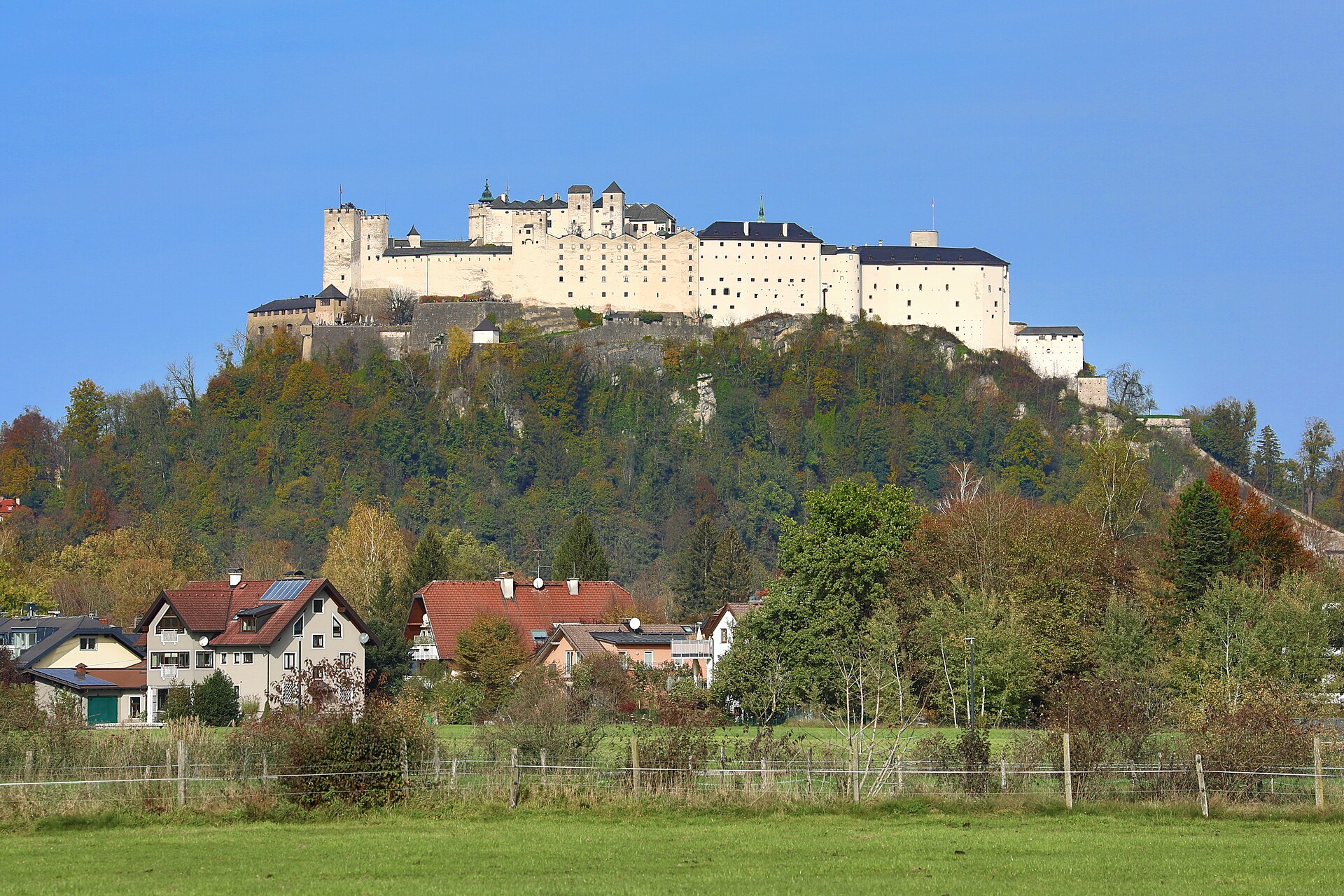
Hohensalzburg Fortress dominates the Salzburg skyline from atop the Festungsberg hill, 506 meters above sea level. Built in 1077 by Archbishop Gebhard during the Investiture Controversy between pope and emperor, it was expanded over the following five centuries into Central Europe's largest fully preserved fortification — a citadel that was never conquered by force. The fortress complex spans over 14,000 square meters and includes prince-archbishop state rooms decorated with Gothic wood carvings, a torture chamber, a marionette museum, and rampart walkways offering panoramic views across the old town, the Salzach River, and the surrounding Alpine peaks. The funicular base is steps from Mozart's Birthplace and the Salzburg Cathedral, and the fortress pairs naturally with a stroll through Mirabell Palace gardens across the river.
Fortification History
Built in 1077 during the Investiture Controversy, Hohensalzburg began as a simple fortified tower and grew over five centuries into an impregnable citadel. The prince-archbishops of Salzburg — who wielded both spiritual and secular power — needed protection not only from external threats but from their own rebellious subjects and the Holy Roman Emperor. Archbishop Leonhard von Keutschach completed the fortress's massive expansion around 1500, adding the Goldene Stube and defensive bastions that made it the most formidable stronghold in the region. Napoleon's forces marched through Salzburg in 1800 but never attempted to storm the fortress — its position was simply too commanding. The Salzburger Stier (Salzburg Bull), a 16th-century mechanical organ, still plays daily at 7 AM, 11 AM, and 6 PM, an echo of the garrison's routine that has continued for 500 years.
Notable Rooms
Goldene Stube: Late-Gothic state room with intricate wood carvings and a ceramic tile stove from 1501 — the prince-archbishop's private audience chamber. Kuenburg Bastion: Best viewpoint for panoramic photos of the old town, river, and Alps. Salzburger Stier (Salzburg Bull): A 16th-century mechanical organ that plays daily at 7 AM, 11 AM, and 6 PM. Fortress Museum: Armor, weapons, and the daily life of medieval garrison soldiers across several rooms. Marionette Museum: Handcrafted puppets from the Salzburg Marionette Theatre's centuries-old tradition. Rampart walks: Circuit of the outer walls with views in every direction — east to the Salzkammergut lakes.
When to Visit
Festungsbahn (funicular): Runs every 10 minutes from Festungsgasse, 1-minute ride. Walking up: 15-20 minute climb via steep paths from Kapitelplatz or Festungsgasse. Open hours: Daily 9 AM-5 PM (extended to 7 PM May-September). Best time: First funicular at 9 AM avoids the tour-group rush; late afternoon offers warm light on the old town below. Evening events: Fortress concerts (classical and folk) run year-round in the medieval state rooms.
Admission and Costs
All-inclusive ticket (funicular + all exhibits): €16.30 adults, €9.30 ages 6-14. Basic ticket (funicular + courtyards only): €13.80 adults. Walking up (exhibits included): €12.70 adults (saves funicular fee). Fortress concerts: €35-45 per person, includes funicular ride. Salzburg Card: Covers fortress entry and funicular along with all other major Salzburg attractions.
Tips for Visitors
Allow 2-3 hours: The fortress is larger than it looks — state rooms, museum, ramparts, and views take time. Funicular queues in summer: Lines build after 10 AM; walk up or arrive at opening to avoid waiting. Wear sturdy shoes: Cobblestone paths inside the fortress and steep walks outside are uneven. Evening concerts worth considering: Chamber music in a medieval hall is a uniquely Salzburg experience. Combine with old town: The funicular base is steps from Mozart's Birthplace and the Salzburg Cathedral. Weather gear: The hilltop is exposed and can be windy — bring a layer even on warm days.