

Overview
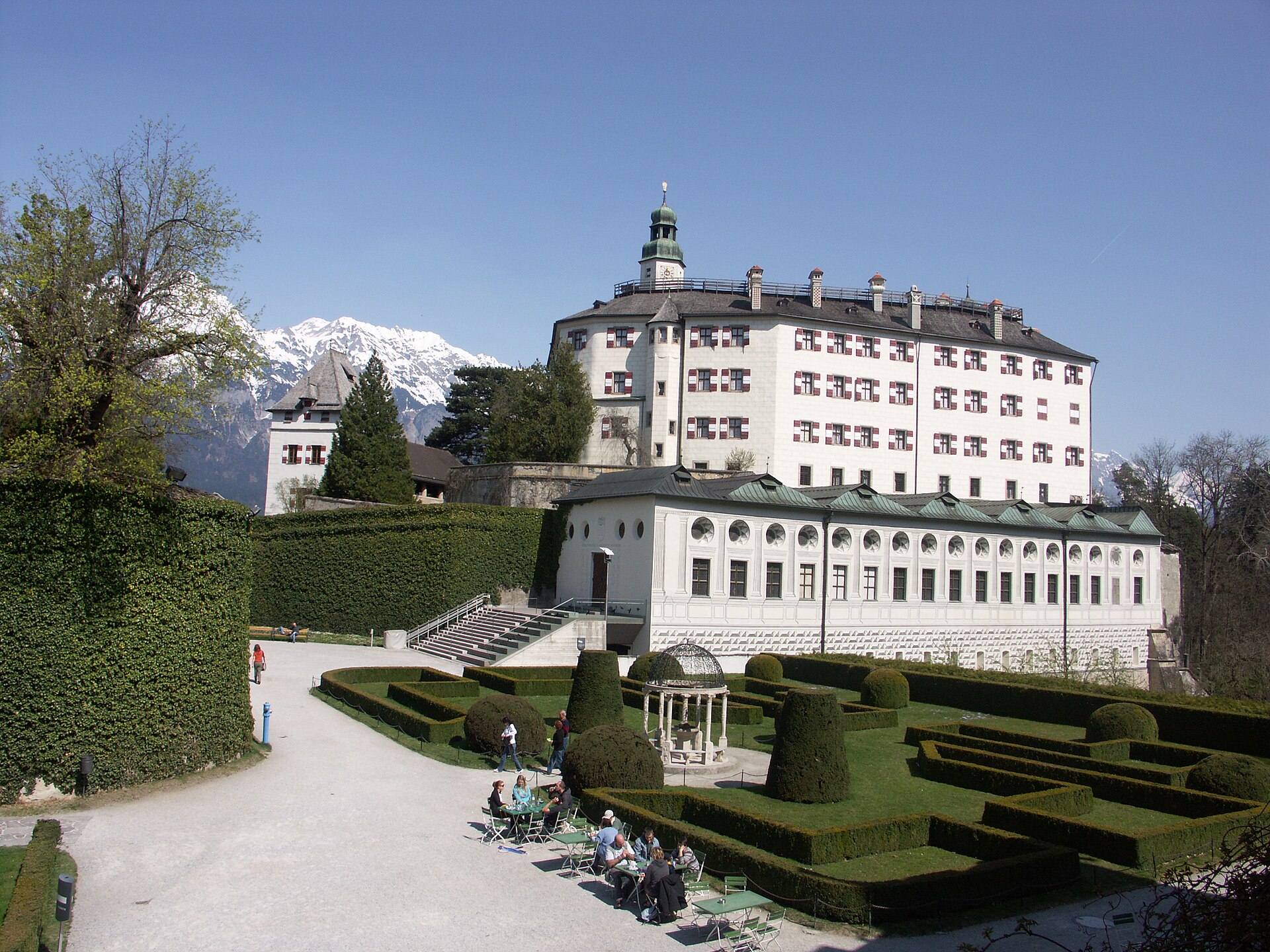
Schloss Ambras sits on a wooded hillside above Innsbruck, transformed in the 1560s-1580s by Archduke Ferdinand II of Tyrol from a medieval fortress into a Renaissance palace to house his extraordinary collections. Ferdinand assembled one of Europe's oldest Kunstkammer (curiosity cabinets) — a systematic collection of armor, natural wonders, scientific instruments, and oddities that predates most European museums by two centuries. The castle's Spanischer Saal (Spanish Hall), a 43-meter-long freestanding structure with 27 full-length portraits of Tyrolean rulers, is considered one of the finest examples of Renaissance interior design in the German-speaking world. The castle pairs well with the Golden Roof in the old town and the Nordkette Cable Car for a full day in Innsbruck.
Fortification History
Ambras began as a medieval fortress controlling the approach to Innsbruck from the south, first documented in the 11th century. When Archduke Ferdinand II acquired it in 1563, he transformed it from a military stronghold into a Renaissance pleasure palace — one of the earliest examples of a European ruler converting a castle into a cultural showpiece. Ferdinand's motivation was partly romantic: his marriage to Philippine Welser, a commoner from Augsburg, was considered scandalous by the Habsburg court, and Ambras became the couple's private retreat. The Kunstkammer (Chamber of Art and Curiosities) Ferdinand assembled here — coral, narwhal tusks, scientific instruments, and armor for the giants and dwarfs at his court — reflects the Renaissance drive to catalogue and understand the entire natural world. The Habsburg Portrait Gallery, with over 200 portraits spanning the dynasty from the 14th to 19th centuries, makes Ambras the most complete visual record of Europe's most powerful family.
Notable Rooms
Kunst- und Wunderkammer (Chamber of Art and Curiosities): Coral, narwhal tusks, scientific instruments, and armor for giants — one of the world's oldest museums, predating most European collections by 200 years. Spanischer Saal (Spanish Hall): 43-meter freestanding Renaissance hall with 27 full-length ruler portraits and a coffered ceiling — acoustically superb for the summer concert series. Habsburg Portrait Gallery: Over 200 portraits spanning the dynasty from the 14th to 19th centuries. Armor Collection: Tournament and battle armor including pieces made for court giants and dwarfs — a Renaissance fascination with human variation. Castle Gardens: Terraced grounds with Alpine mountain views, perfect for a post-visit stroll.
When to Visit
Open: Daily 10 AM-5 PM (closed November). Summer hours: Extended to 5 PM; gardens open longer. Duration: Allow 2-3 hours for the castle, collections, and gardens. Getting there: Bus 4134 from Innsbruck center (15 minutes), or pleasant 30-minute walk. Best time: Morning for fewer crowds; the castle is less visited than central Innsbruck attractions.
Admission and Costs
Adults: €16 (includes all collections and exhibitions). Reduced (students, seniors): €12. Under 19: Free. Gardens only: Free entry. Innsbruck Card: Includes Ambras Castle entry. Private guide: Part of half-day Innsbruck tours (€150-240 for up to 6 people).
Tips for Visitors
Less crowded than expected: Many tourists skip Ambras for the old town — those who visit enjoy smaller crowds. Take the bus: Bus 4134 runs regularly from the center; the uphill walk is pleasant but steep in places. Photography allowed: Non-flash photography permitted throughout the collections. Combine with Bergisel: The Olympic ski jump is on the same side of Innsbruck — a natural pairing for a half-day. Summer concerts: The Spanischer Saal hosts the Ambras Castle Concerts series (classical music) in summer — book ahead. Café in the castle: Small restaurant in the grounds for coffee and Tyrolean cake after your visit.